As an Amazon Associate we earn from qualifying purchases. Learn more.
Leather Lifting Belt vs Lever Belt vs Nylon (2026)
Choosing between leather, lever-style, and nylon lifting belts comes down to three tradeoffs: comfort, performance, and price. This head-to-head comparison focuses on the practical differences and uses three Element 26 self-locking nylon belts as real-world examples of the nylon option. You'll learn how nylon stacks up against traditional leather and lever systems, what to expect for fit and durability, and which belt to buy depending on your training goals. Products were selected from Element 26’s self-locking lineup and evaluated using product features, customer feedback on fit and support, and common buyer concerns like smell, sizing, and build quality.
Quick Answer
For most lifters the Element 26 Self-Locking Weight Lifting Belt (ASIN B09NX9RFSP) delivers the best balance of secure self‑locking performance, comfortable 4" profile, and mid‑range price. The other Element 26 variants offer the same core design if you need alternate sizing or a slightly different fit.
Our Top Picks
Quick Comparison
Select 2-3 products to compare side-by-side
| Compare | Product | FitReliant Score | Price Tier | Key Feature | Best For | Action |
|---|---|---|---|---|---|---|
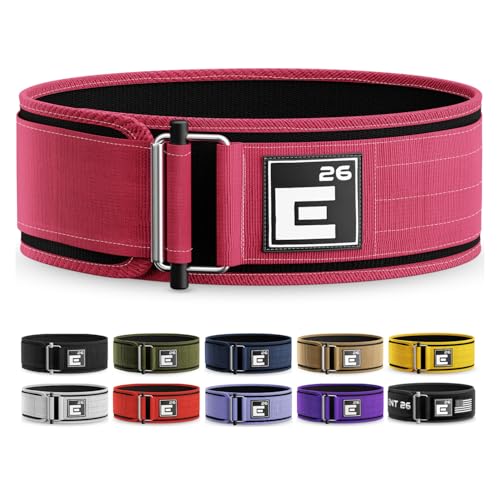 Element 26 Self-Locking
|
Mid-Range | Full metal self-locking buckle | Lifters wanting secure, quick adjustability | Check Price | ||
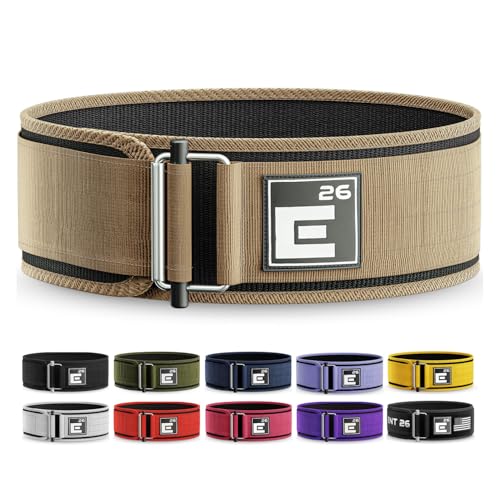 Element 26 (Imported)
|
Mid-Range | Imported nylon construction | Buyers seeking a cost-effective self-locking nylon belt | Check Price | ||
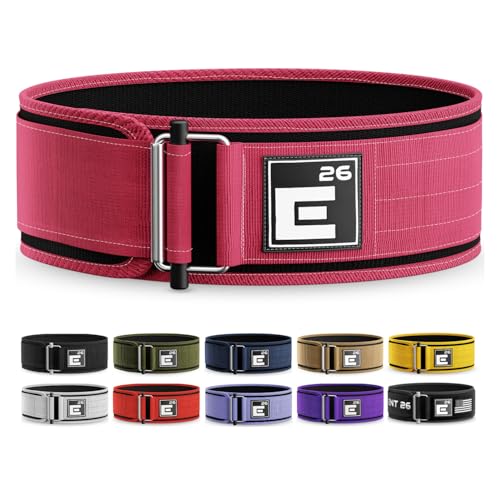 Element 26 Training Belt
|
Mid-Range | Competition-approved uniform profile | Competitive lifters and high-intensity training | Check Price |
1. Element 26 Self-Locking Weight Lifting Belt - Premium Weightlifting Belt for Serious Functional Fitness and Olympic Lifting Athletes - Lifting Support for Men and Women - Deadlift Training Belt
A nylon, self-locking 4" belt built for stability during heavy lifts. Customers praise its lockability, even pressure profile, and ease of use—making it an excellent all‑around choice for functional fitness and Olympic-style lifting.
Key Specs
- Material: 100% premium nylon
- Profile: uniform 4-inch width
- Buckle: full metal self-locking
- Competition: competition‑approved design
Pros
- Very secure self-locking buckle that resists slipping compared to cheap strap systems
- Even 4" profile provides consistent intra‑abdominal pressure and comfort for most lifters
- Generally praised for strong build quality and value for the price
Cons
- Sizing can feel tight for some users — limited adjust range compared with padded belts
- Not leather; lacks the traditional feel and long-term edge wear of leather belts
Best For: Lifters wanting secure, quick adjustability
Check Latest Price on Amazon2. Element 26 Self-Locking Weight Lifting Belt - Premium Weightlifting Belt for Serious Functional Fitness and Olympic Lifting Athletes - Lifting Support for Men and Women - Deadlift Training Belt
Same core self-locking nylon design marketed as an imported model. It offers the same 4" profile and metal buckle for reliable support, with solid perceived value — a sensible choice if you want nylon performance without leather pricing.
Key Specs
- Material: premium nylon (imported)
- Profile: uniform 4-inch width
- Buckle: full metal self-locking
- Design: flat (no padded inserts or mesh coverings)
Pros
- Comparable performance to other Element 26 models with strong lockability
- Simpler design avoids padded inserts that can shift pressure
- Good value — mid‑range price with competition‑style profile
Cons
- Very similar to other Element 26 SKUs — may not be worth switching if you own another model
- Limited sizing options for very large or very small waists
Best For: Buyers seeking a cost-effective self-locking nylon belt
Check Latest Price on Amazon3. Element 26 Self-Locking Weight Lifting Belt - Premium Weightlifting Belt for Serious Functional Fitness and Olympic Lifting Athletes - Lifting Support for Men and Women - Deadlift Training Belt
A performance-focused nylon belt with the same self-locking system and 4" profile aimed at athletes who want a consistent pressure distribution for squats and deadlifts. Works well as a practical competition or training belt.
Key Specs
- Material: premium nylon
- Profile: uniform 4-inch profile for consistent pressure
- Buckle: full metal self-locking
- Use: marketed for Olympic and functional fitness athletes
Pros
- Designed for performance with no gimmicks — even pressure and reliable lock
- Quick to put on/off, useful in fast training environments
- Durable hardware that outlasts cheap strap systems
Cons
- Not ideal if you prefer the stiffness and longevity of thick leather belts
- Some users report the 4" profile can feel bulky for certain movements
Best For: Competitive lifters and high-intensity training
Check Latest Price on AmazonWhich One Should You Choose?
If you want the safest all‑around choice that balances comfort, lockability, and cost, buy the Element 26 Self-Locking Weight Lifting Belt (ASIN B09NX9RFSP). If you’re watching spending but still want reliable self-locking performance, the Element 26 imported variant (ASIN B08WSGHHSJ) gives nearly identical function at the same mid-range tier — good as a secondary or backup belt. If your training focuses on competition prep and you want the simplest, performance-oriented option for fast on/off and repeatable tension, choose the Element 26 training model (ASIN B09NX5RKGZ). In short: B09NX9RFSP for best overall balance, B08WSGHHSJ if you need a budget-conscious pick within this lineup, and B09NX5RKGZ for focused performance use.
Best for Specific Scenarios
- Everyday gym training: Element 26 Self-Locking (B09NX9RFSP) because the 4" profile and easy self-locking buckle balance comfort and support for mixed sessions.
- Group classes and fast transitions: Element 26 (B08WSGHHSJ) because it’s lightweight, quick to put on and off, and avoids padded inserts that shift pressure.
- Competition prep: Element 26 Training Belt (B09NX5RKGZ) because the competition‑style uniform profile and secure metal buckle give consistent pressure for heavy singles.
Frequently Asked Questions
Are nylon self-locking belts as secure as leather or lever belts?
Yes for most lifters. Quality nylon belts with a full metal self-locking buckle provide very secure closure and consistent pressure for squats and deadlifts. Leather and lever belts deliver a stiffer platform for maximal singles, but nylon is lighter, more comfortable, and faster to adjust for mixed training.
How should a lifting belt fit for best performance?
Wear the belt at the level you plan to brace (usually just above the hips). It should be tight enough to create intra‑abdominal pressure without restricting breathing. Check the manufacturer’s sizing guide and note customers often report belts that 'barely fit', so confirm measurements before you buy.
Do these Element 26 belts meet competition rules?
Element 26 markets its self-locking 4" design as competition‑approved. Always verify your federation’s specific rules about belt material, width, and buckle type before competing.
How We Selected These Products
Our recommendations are based on data-driven analysis: we evaluated 13975+ products across 2484+ brands using a composite scoring system that weighs rating (40%), review volume (30%), price value (20%), and demand signals (10%). Every product is ranked by data, not opinions.
Last updated: June 19, 2026
As an Amazon Associate we earn from qualifying purchases at no extra cost to you. Full disclosure.
FitReliant Score is our editorial ranking based on a composite analysis of product quality, value, and verified customer sentiment. Click through to Amazon for current pricing, availability, and live customer reviews.