As an Amazon Associate we earn from qualifying purchases. Learn more.
Best Foam Rollers for Runners (2026)
Runners — whether you're training for a 5K, logging marathon miles, or pounding daily pavement — need recovery tools that are effective, durable, and easy to use. This guide reviews three TriggerPoint foam rollers that remain top choices for runners in 2026. You'll learn which roller suits fast-recovery days, travel, or budget needs, and what features matter for a running-specific routine. Products were selected based on build quality, portability, multi-density massage surface, customer feedback about fit and function, and suitability for typical runner use cases.
Quick Answer
For most runners the TriggerPoint Grid 1.0 (ASIN B0040EGNIU) is the best choice — its multi-density GRID and EVA-wrapped hollow core deliver durable, deep-tissue recovery in a travel-friendly 13" size. If you need the most portable standard roller choose the TriggerPoint 13 x 5.5 (ASIN B00DT15O3K); budget-conscious runners can get solid performance from the TriggerPoint 13" budget variant (ASIN B00DFHF2MG).
Our Top Picks
Quick Comparison
Select 2-3 products to compare side-by-side
| Compare | Product | FitReliant Score | Price Tier | Key Feature | Best For | Action |
|---|---|---|---|---|---|---|
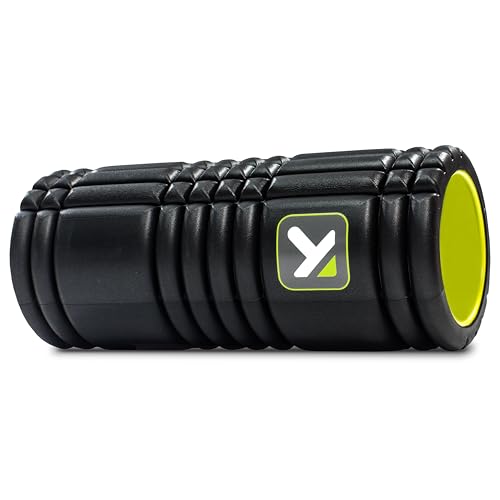 Grid 1.0 13"
|
Premium | Multi-density GRID with Distrodensity zones | Runners needing deep-tissue recovery | Check Price | ||
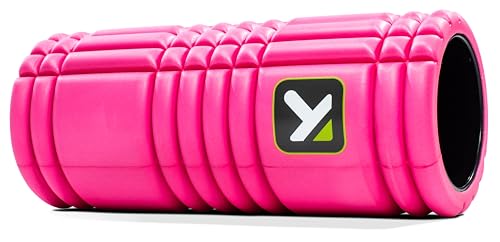 Grid 13 x 5.5
|
Premium | Rigid hollow core + online instruction | Runners who travel or need portability | Check Price | ||
 Grid 13" (Budget)
|
Budget | Patented multi-density exterior | Runners on a budget needing reliable recovery | Check Price |
1. TriggerPoint Grid 1.0 Foam Roller - 13" Multi-Density Massage Roller for Deep Tissue & Muscle Recovery - Relieves Tight, Sore Muscles & Kinks, Improves Mobility & Circulation - Targets Key Body Parts
This 13" TriggerPoint Grid is built for frequent use and targets tight hips, IT bands and calves with a three-dimensional grid that mimics hands-on massage. The EVA-foam wrapped hollow core keeps the roller firm under bodyweight for deeper compression without losing shape — ideal for post-long-run recovery and mobility work.
Key Specs
- Multi-density GRID surface for targeted pressure
- EVA-foam wrapped, hollow core construction
- 13 inches long — travel-friendly size
- Designed for frequent, deep-tissue use
Pros
- Durable construction holds shape under repeated use
- Three-dimensional surface provides targeted deep-tissue relief
- Compact 13" size that still covers large muscle groups
Cons
- Premium price compared with basic foam rollers
- Surface may feel intense for beginners or very sore days
Best For: Runners needing deep-tissue recovery
Check Latest Price on Amazon2. TriggerPoint Grid 1.0 Foam Roller - 13" Multi-Density Massage Roller for Deep Tissue & Muscle Recovery - Relieves Tight, Sore Muscles & Kinks, Improves Mobility & Circulation - Targets Key Body Parts
This version of the Grid keeps the same patented multi-density exterior but in a compact 13 x 5.5" profile that customers note is easy to toss in a gym bag. Built over a rigid hollow core and backed by a 500 lb weight limit, it’s a sturdy portable option for runners who want on-the-road recovery and guided rolling technique via included video access.
Key Specs
- Patented multi-density exterior over rigid hollow core
- Size: 13 x 5.5 inches — compact profile
- 500 lb weight limit and 1-year manufacturer's warranty
- Includes access to online instructional video library
Pros
- Small footprint makes it easy to carry to races or gyms
- Sturdy build handles heavier users without deforming
- Instructional videos help runners use it effectively
Cons
- Compact length can require repositioning for some moves
- Premium-tier price despite smaller size
Best For: Runners who travel or need portability
Check Latest Price on Amazon3. TriggerPoint Grid Patented Multi-Density Foam Massage Roller (Back, Body, Legs) for Exercise, Deep Tissue and Muscle Recovery - Relieves Muscle Pain & Tightness, Improves Mobility & Circulation (13")
The budget variant of the Grid keeps the brand’s multi-density surface and a hollow rigid core but at a lower price tier. It provides the same targeted rolling pattern runners use for glute, quad, and calf work and is a strong value pick for everyday maintenance and for runners who want therapist-style texture without the higher cost.
Key Specs
- Patented multi-density surface to mimic hands
- Imported foam construction designed to hold shape
- 13 inches long — standard roller length
- Trusted design used by therapists and coaches
Pros
- Excellent value for the branded multi-density design
- Effective for general muscle maintenance and mobility
- Solid build quality relative to other budget rollers
Cons
- Lower-cost construction may show wear faster under heavy use
- Some users report initial factory smell that dissipates
Best For: Runners on a budget needing reliable recovery
Check Latest Price on AmazonWhich One Should You Choose?
If budget is tight → TriggerPoint Grid 13" (ASIN B00DFHF2MG). If you need portable recovery for race weekends & in-gym use → TriggerPoint Grid 13 x 5.5 (ASIN B00DT15O3K). If premium build, deepest tissue work, and long-term shape retention matter most → TriggerPoint Grid 1.0 (ASIN B0040EGNIU).
Best for Specific Scenarios
- After long runs / marathon training: TriggerPoint Grid 1.0 (B0040EGNIU) because its EVA-wrapped hollow core and multi-density surface provide sustained deep pressure to help with muscle repair and circulation.
- Race weekend and travel: TriggerPoint Grid 13 x 5.5 (B00DT15O3K) because the compact 13 x 5.5" profile fits easily in a suitcase or race bag for quick warm-up and cool-down sessions.
- Everyday maintenance on a budget: TriggerPoint Grid 13" Budget (B00DFHF2MG) because it delivers the branded multi-density rolling pattern at a lower price, great for daily post-run mobility work.
Frequently Asked Questions
How often should runners use a foam roller?
Most runners benefit from 3–6 minutes per muscle group, 3–7 times per week. Use shorter, focused sessions after hard workouts or long runs, and gentler rolling on easy days. Avoid aggressive rolling over inflamed or sharp injuries — consult a clinician if unsure.
Will a foam roller replace massage or physical therapy?
A foam roller is a self-care tool that complements massage and therapy but doesn't fully replace professional assessment and hands-on treatment. It helps maintain tissue mobility and reduce stiffness between appointments, and can reduce the frequency or length of professional treatments when used correctly.
Why does my new foam roller smell, and is it safe?
A temporary factory or chemical odor is common with some foams and coatings. It typically dissipates after a few days of airing out. To speed this up, leave the roller in a ventilated space or wipe it with a mild soap solution. Strong persistent odors or sticky residue may indicate lower-quality materials — consider returning or exchanging if concerned.
How We Selected These Products
Our recommendations are based on data-driven analysis: we evaluated 13975+ products across 2484+ brands using a composite scoring system that weighs rating (40%), review volume (30%), price value (20%), and demand signals (10%). Every product is ranked by data, not opinions.
Last updated: May 21, 2026
As an Amazon Associate we earn from qualifying purchases at no extra cost to you. Full disclosure.
FitReliant Score is our editorial ranking based on a composite analysis of product quality, value, and verified customer sentiment. Click through to Amazon for current pricing, availability, and live customer reviews.