As an Amazon Associate we earn from qualifying purchases. Learn more.
Training Wheels vs Balance Bike vs Coaster Brake for Toddlers (2026)
Choosing between training wheels, a balance bike, and coaster/foot-brake bikes is one of the first big decisions for parents teaching a toddler to ride. This guide compares real-world starter approaches for ages 2–5 and tests three popular kid bikes so you can pick the fastest, safest learning path. We selected products based on build design (convertible vs training-wheel), child-friendly features (adjustable seat, brakes, chain guard), and customer feedback about fit, assembly, and durability.
Quick Answer
For most 2–5 year olds the best starter is a balance-to-pedal model that lets kids learn balance first and add pedaling later — our top pick is the RoyalBaby Kids Bike EZ Freestyle (B00LC8FEDM). If you want a premium, well-built traditional training-wheel bike with a foot brake, choose the JOYSTAR B07FN18CWW.
Our Top Picks
Quick Comparison
Select 2-3 products to compare side-by-side
| Compare | Product | FitReliant Score | Price Tier | Key Feature | Best For | Action |
|---|---|---|---|---|---|---|
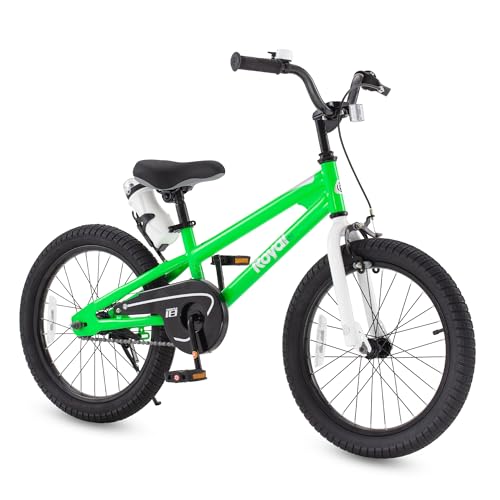 RoyalBaby EZ Freestyle
|
Budget | Freewheel balance-to-pedal design | Kids who’ll progress from balance to pedals | Check Price | ||
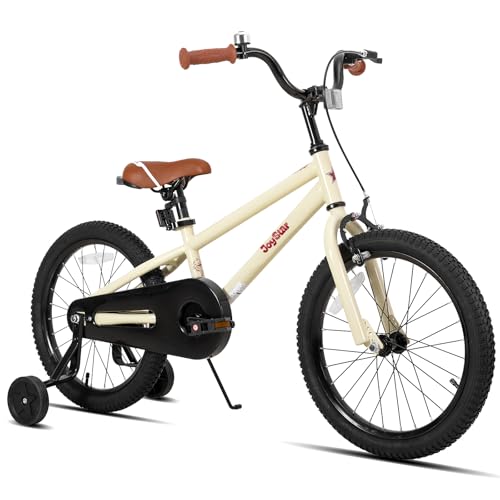 JOYSTAR BMX (B07FN18CWW)
|
Premium | Sturdy steel frame with foot brake | Parents wanting traditional training wheels + foot brake | Check Price | ||
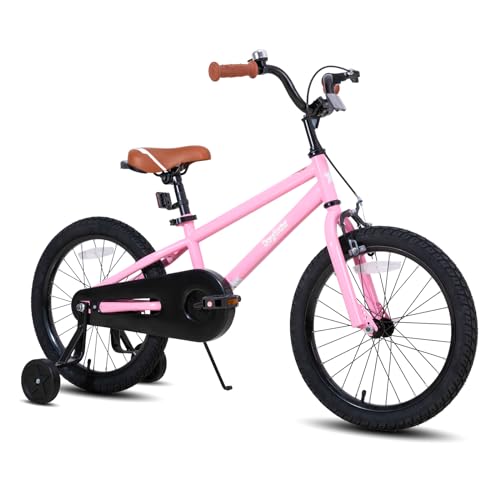 JOYSTAR BMX (B088D57KTM)
|
Premium | Kid-focused fit with chain guard | Families wanting a similar premium option or spare | Check Price |
1. RoyalBaby Kids Bike EZ Freestyle Training Free Balance to Pedal Easy Learning Bicycle, 12-18 Inch for Toddlers to Big Kids
A lightweight-ish convertible that starts as a freewheel balance bike and converts to a pedal bike with training wheels—ideal for kids who will transition quickly from balancing to pedaling. Customers praise easy assembly, good build quality, and value for money, though fit and weight opinions vary.
Key Specs
- Frame: Carbon steel
- Available sizes: 12 / 14 / 16 / 18 inch
- Weight (16" model approx): 19.8 lb
- Features: patent sealed bearings, adjustable seat & handlebars
Pros
- Easier transition to pedals than standard training-wheel bikes
- Faster, simpler assembly than many competitors
- Better value for money than many premium kids' bikes
Cons
- Seen as heavier than some balance-only bikes
- Fit is inconsistent for some children — double-check size
Best For: Kids who’ll progress from balance to pedals
Check Latest Price on Amazon2. JOYSTAR Kids Bike for Ages 2-12 Years Old Boys Girls, 12-20 Inch BMX Style Kid's Bikes with Training Wheels, Children Bicycle for Kids and Toddler, Multiple Colors
A solidly built training-wheel bike with a foot brake and quick-release seat—good for toddlers who need stability and an easier braking option. It’s well-liked for looks and ease of assembly, but some users report sprocket or training-wheel fastener issues that require tightening.
Key Specs
- Frame: Premium steel
- Available sizes: 12"–20"
- Brake: Foot brake (suitable for small hands)
- Extras: DIY decal, chain guard, quick-release seat
Pros
- Robust steel frame that's sturdier than many budget models
- Foot brake is easier for toddlers than small hand levers
- Quick seat adjustment and helpful chain guard for safety
Cons
- Some reports of sprocket or fastener looseness over short use
- Mixed feedback on long-term durability vs heavier-duty frames
Best For: Parents wanting traditional training wheels + foot brake
Check Latest Price on Amazon3. JOYSTAR Kids Bike for Ages 2-12 Years Old Boys Girls, 12-20 Inch BMX Style Kid's Bikes with Training Wheels, Children Bicycle for Kids and Toddler, Multiple Colors
Nearly identical in design to the other JOYSTAR model, offering the same kid-friendly features: quick-release seat, foot brake, and protective chain guard. Ideal if you prefer the JOYSTAR look or need a second compatible option; watch for the same maintenance notes.
Key Specs
- Frame: Premium steel
- Available sizes: 12"–20"
- Brake: Foot brake
- Extras: DIY decal and chain guard
Pros
- Similar sturdy feel as the other JOYSTAR and good looks
- Easy assembly with most pieces pre-installed
- Helpful protective features like the chain guard
Cons
- Also subject to occasional sprocket/fastener looseness
- Some buyers find it heavier than expected for toddlers
Best For: Families wanting a similar premium option or spare
Check Latest Price on AmazonWhich One Should You Choose?
If you want the fastest path to independent riding, buy the RoyalBaby EZ Freestyle (B00LC8FEDM). Its freewheel balance-to-pedal design helps kids learn balance first and adopt pedaling without a full equipment swap — great value for most 2–5 year olds. If you prefer a traditional training-wheel bike with a simpler braking system and heavier-duty frame, pick the JOYSTAR B07FN18CWW. If you like the JOYSTAR styling or want a second compatible option, the JOYSTAR B088D57KTM is a near-identical alternative.
Best for Specific Scenarios
- Fast balance learning: RoyalBaby EZ Freestyle — its freewheel setup lets toddlers practice balance before pedaling.
- Small hands / easy stopping: JOYSTAR B07FN18CWW — foot brake is easier for young riders than hand levers.
- Value-conscious families who still want quality: RoyalBaby EZ Freestyle — solid build and simpler assembly compared with many premium-only models.
Frequently Asked Questions
At what age should a child switch from balance bike to pedals?
Most children are ready to add pedals between about 2.5 and 4.5 years, depending on height and coordination. A balance-to-pedal bike removes the guesswork: once they confidently glide and steer, you can attach pedals or switch modes.
Are training wheels or a balance bike better for long-term riding?
Balance bikes generally lead to faster independent riding because they teach balance first. Training wheels teach pedaling early but can delay balance skills. Convertible models give a middle ground—balance now, pedals later.
How important is frame material and weight for toddler bikes?
Frame material affects durability and weight. Steel frames are sturdy but can be heavier; lighter alloy or magnesium cut weight but may cost more. For toddlers, a lighter bike is easier to handle and transport, but durability matters if the bike will be used hard or kept for multiple children.
How We Selected These Products
Our recommendations are based on data-driven analysis: we evaluated 13975+ products across 2484+ brands using a composite scoring system that weighs rating (40%), review volume (30%), price value (20%), and demand signals (10%). Every product is ranked by data, not opinions.
Last updated: June 11, 2026
As an Amazon Associate we earn from qualifying purchases at no extra cost to you. Full disclosure.
FitReliant Score is our editorial ranking based on a composite analysis of product quality, value, and verified customer sentiment. Click through to Amazon for current pricing, availability, and live customer reviews.