As an Amazon Associate we earn from qualifying purchases. Learn more.
How to Fit a Weighted Vest for Commuting Walks and Rucking (2026)
Carrying extra weight on daily walks or while rucking can boost fitness, but a poor fit causes shoulder pain, chafing, and awkward load shifts. This guide is for commuters, active ruckers, and fitness walkers who need practical advice on sizing, chafe prevention, and balanced load distribution. You’ll learn how to set up a vest or plate system that stays put during long walks, what materials and adjustments reduce rubbing, and which plate and vest combos solve common problems. Products were selected for build quality, adjustability, and how well they address fit and load distribution in real-world walking and rucking situations.
Quick Answer
For commuting walks and rucking, choose a vest that fits snugly with adjustable load placement and padded contact points — our top pick, POLYFIT Weight Vest Plates (ASIN B0B74BZGH6) plus a compatible carrier, gives modular steel plates for predictable load distribution and easy tuning of weight.
Our Top Picks
Quick Comparison
Select 2-3 products to compare side-by-side
| Compare | Product | FitReliant Score | Price Tier | Key Feature | Best For | Action |
|---|---|---|---|---|---|---|
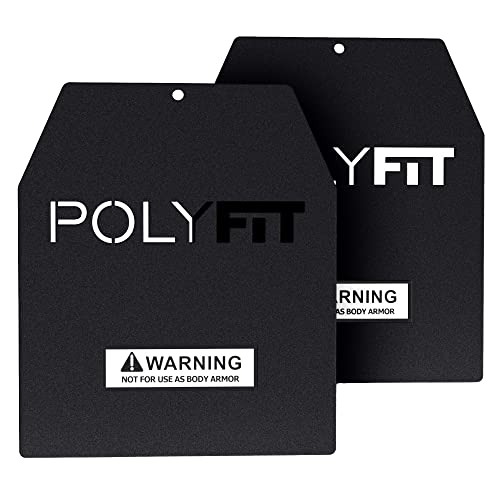 POLYFIT Plates (9lb pair)
|
Mid-Range | Modular steel plates for precise loads | Customizing weight for rucking/commutes | Check Price | ||
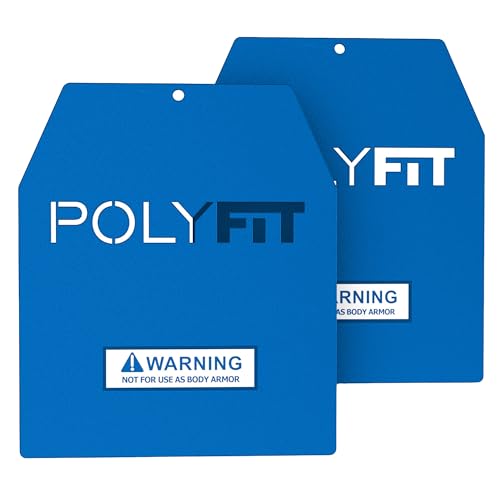 POLYFIT Plates (4lb pair)
|
Budget | Lightweight incremental plates | Beginners and short commutes | Check Price | ||
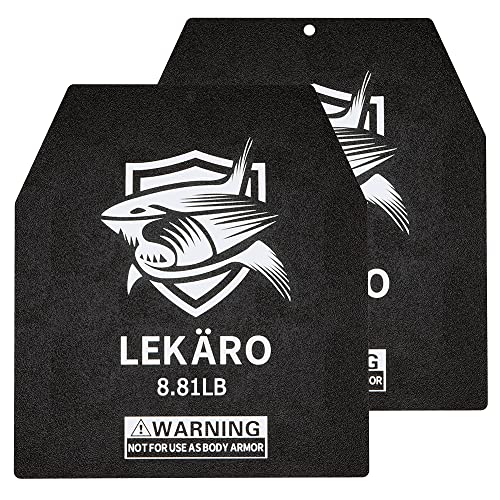 LEKARO Vest Plates
|
Budget | Powder-coated, rounded-edge plates | Ruckers wanting value and durability | Check Price | ||
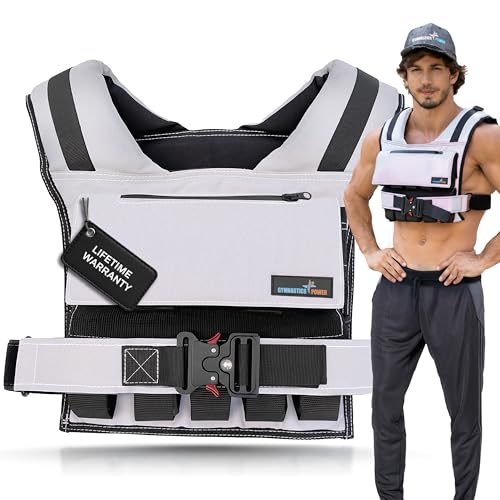 Gymnastics Power Vest
|
Premium | 1000D nylon shell with padded straps | Long commutes and comfort-focused ruckers | Check Price | ||
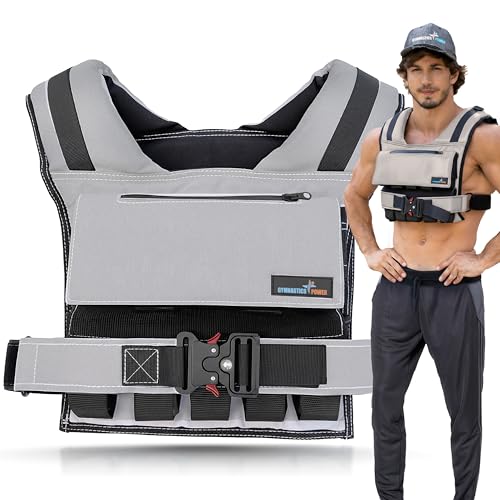 Gymnastics Power Vest (alt ASIN)
|
Premium | Minimalist, form-fitting design | Active walkers needing range of motion | Check Price |
1. POLYFIT Weight Vest Plates - Weighted Plates for Strength Training Weight Vests - 4lb, 6lb, 9lb, 14lb, 19lb Pairs
These heavy-duty steel plates let you dial in weight in small increments so the load stays centered and predictable during walking or rucking. Because they’re laser-cut with a matte finish, they resist corrosion and slot into many carriers to improve load distribution compared with loose sand or soft weights.
Key Specs
- Available in paired sizes: 4, 6, 9, 14, 19 lb
- Made of heavy-duty laser-cut steel
- Matte finish to resist corrosion
- Compatible with many weight vest carriers
Pros
- Precise, modular weight increments for balanced load
- Durable steel construction resists wear
- Fits multiple vest carriers for versatility
Cons
- Steel plates add hard contact points if vest padding is minimal
- Requires a compatible carrier to prevent chafe
Best For: Customizing weight for rucking/commutes
Check Latest Price on Amazon2. POLYFIT Weight Vest Plates - Weighted Plates for Strength Training Weight Vests - 4lb, 6lb, 9lb, 14lb, 19lb Pairs
The budget 4 lb pair is ideal when you’re beginning rucking or want a light daily load for commuting. Small increments help prevent overloading, and compatibility with several carriers makes it easy to test vest fit and adjust weight distribution before committing to heavier plates.
Key Specs
- 4 lb per plate (pair adds 10 lb total in product listing combinations)
- Laser-cut steel with protective finish
- Compatible with Polyfit vest and many carriers
- Good starter increment for progressive loading
Pros
- Affordable way to add modest weight
- Works with many vest platforms to test fit
- Helps reduce chafing risk by avoiding bulky soft packs
Cons
- Smaller plates may shift in poorly designed pockets
- Same hard contact point caveat — needs a padded carrier
Best For: Beginners and short commutes
Check Latest Price on Amazon3. Weighted Vest Plates 5.51/8.81/15.43/20.94LB Pair for Weight Vests, Strength Training, Heavy Workout, Fitness, Running
LEKARO plates are powder-coated with rounded edges to lower fabric wear and make pockets more comfortable against the body. Customers report good value and a secure fit in common vest pockets; however, weight labels can vary, so weigh plates before planning heavy rucks to ensure balanced distribution.
Key Specs
- Available in multiple weight pairs (approx. 5.51–20.94 lb)
- Powder-coated steel to resist rust
- Rounded, smooth edges to reduce abrasion
- Compatible with many weighted vests and carriers
Pros
- Good value for steel plates
- Edge finishing helps prevent pocket wear and chafe
- Powder coating improves longevity
Cons
- Reported weight variance — check actual mass before heavy use
- Hard plates require proper padding/placement to avoid pressure points
Best For: Ruckers wanting value and durability
Check Latest Price on Amazon4. Weighted Vest Adjustable for Men and Women Workout Weight Training Vest for Fitness, Running, Strength, Exercise & Cross Training
This adjustable vest uses heavy-duty 1000D nylon and TPE-padded shoulder straps to reduce rubbing and distribute weight across the torso. Its removable incremental weights make it easy to position load for minimal bounce and maximum comfort on walks and rucks.
Key Specs
- Constructed from 1000D nylon with double-stitching
- TPE foam padded shoulder straps
- Removable incremental weights for scaling load
- Reflective stripes for visibility
Pros
- Comfort-oriented build reduces chafe on longer walks
- Adjustable fit helps tailor load distribution
- Solid construction for long-term use
Cons
- Premium materials come at a higher price tier
- Can feel warm on hot commutes due to dense fabric
Best For: Long commutes and comfort-focused ruckers
Check Latest Price on Amazon5. Weighted Vest Adjustable for Men and Women Workout Weight Training Vest for Fitness, Running, Strength, Exercise & Cross Training
Same design as the other Gymnastics Power listing: a snug, minimalist fit that hugs the body to prevent bounce during sprints and long walks. The neoprene-like panels and secure straps reduce chafe and help maintain even load distribution while moving.
Key Specs
- Form-fitting, minimalist design to limit bounce
- Double-stitched neoprene-like panels
- Padded adjustable shoulder straps
- Reflective accents for low-light safety
Pros
- Snug fit prevents load shift during motion
- Easy to add/remove weights for customizing distribution
- Built to handle repeated use
Cons
- May run small for broader-chested users — measure carefully
- Dense materials can trap heat on long rides/walks
Best For: Active walkers needing range of motion
Check Latest Price on AmazonWhich One Should You Choose?
If budget is tight → choose the POLYFIT 4 lb plates (ASIN B0B73J97GW) to start with light, incremental loads. If you want predictable, modular loading for rucking and commuting → go with the POLYFIT 9 lb plate option (ASIN B0B74BZGH6) paired with a padded carrier. If premium comfort for long commutes matters → pick the Gymnastics Power vest (ASIN B0DLH7D1WS) for padded straps, reinforced build, and adjustable fit.
Best for Specific Scenarios
- Daily commuter walks under 20 minutes: POLYFIT 4 lb plates (B0B73J97GW) because light, modular weight avoids posture strain.
- Weekend rucks 3–10 miles: POLYFIT 9 lb plates (B0B74BZGH6) because steel plates give repeatable, balanced loads for progressive training.
- Long commutes or mixed-use (running + walking): Gymnastics Power vest (B0DLH7D1WS) because padded straps and form-fitting design reduce bounce and chafe.
Frequently Asked Questions
How tight should a weighted vest be for walking and rucking?
The vest should be snug enough to stop vertical and side-to-side movement but not so tight that it restricts breathing or arm swing. Tighten shoulder and waist straps until the vest feels locked to your torso; test with short walks and a few stairs to confirm it won’t ride up or bounce.
How do I prevent chafing from plates or seams?
Use a thin moisture-wicking base layer under the vest, choose carriers with padded pockets that fully cover plate edges, and add thin foam or cloth liners between hard plates and the body. For seams, look for vests with smooth internal stitching or a soft lining.
How should I distribute plates for a balanced load?
Place weights symmetrically left/right and, when possible, front/back so the center of mass stays near your midline. Start with lighter totals and add equal increments on both sides. Avoid putting heavy plates only low or only on one side, which causes torque and back strain.
Can I ruck with steel plates without a purpose-built vest?
You can, but it’s riskier. Steel plates need covered pockets and secure straps to avoid pressure points and shifting. If you don’t have a purpose-built vest, add extra padding and test short walks before longer rucks.
How much weight is safe for commuting walks?
Start light—an extra 5–15% of your bodyweight is a conservative starting point, and increase gradually based on comfort, posture, and lack of pain. Prioritize a vest and plate setup that keeps weight stable and non-restrictive during daily activities.
How We Selected These Products
Our recommendations are based on data-driven analysis: we evaluated 13975+ products across 2484+ brands using a composite scoring system that weighs rating (40%), review volume (30%), price value (20%), and demand signals (10%). Every product is ranked by data, not opinions.
Last updated: September 16, 2026
As an Amazon Associate we earn from qualifying purchases at no extra cost to you. Full disclosure.
FitReliant Score is our editorial ranking based on a composite analysis of product quality, value, and verified customer sentiment. Click through to Amazon for current pricing, availability, and live customer reviews.