As an Amazon Associate we earn from qualifying purchases. Learn more.
How to Create a Safe Home Lifting Program Without a Spotter (2026)
Training heavy without a spotter is a common pain point: missed reps, fear of getting pinned, and uncertainty about whether your gear will hold up. This guide shows how to minimize those risks through proven hardware (safety arms, reinforced attachments, collars) and programming strategies so you can lift alone with confidence. You’ll learn gear that actually prevents accidents, how to set safety heights and collars, and simple programming tweaks that reduce failure risk. Products were selected for build quality, safety features, real-world fit with common racks, and customer-reported value and functionality.
Quick Answer
Yes — you can train safely alone by combining reliable rack safety arms (like the Kipika Safety Spotter Arms B0D2TJD7CL), firm collars, and programmed warmups/fail-safe heights. The Kipika set (B0D2TJD7CL) is our top pick for balancing sturdiness and ease of use when training solo.
Our Top Picks
Quick Comparison
Select 2-3 products to compare side-by-side
| Compare | Product | FitReliant Score | Price Tier | Key Feature | Best For | Action |
|---|---|---|---|---|---|---|
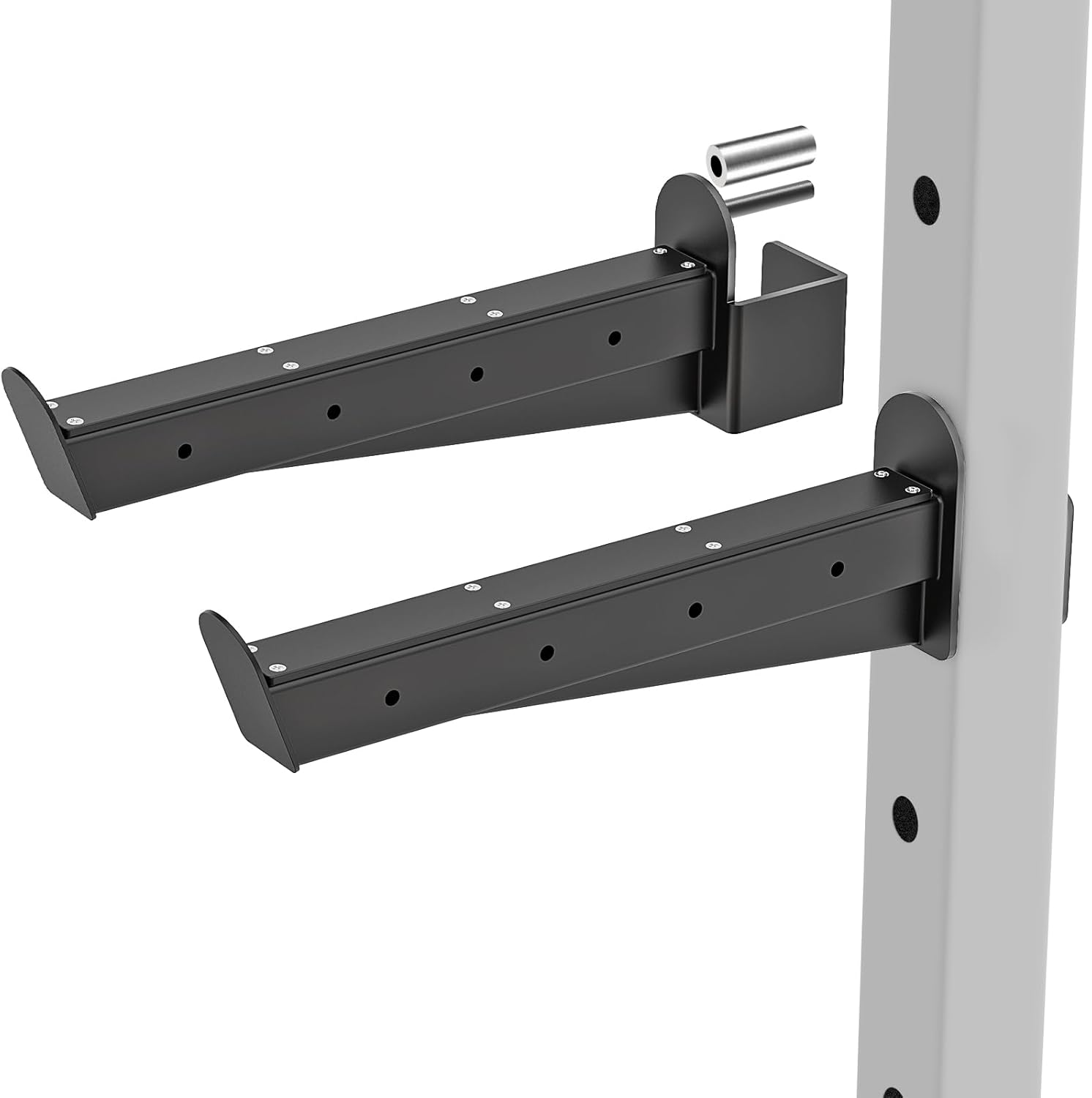 Kipika Spotter Arms (3x3)
|
Mid-Range | 500 lb rated steel arms with rubber pad | Solo lifters with 3"x3" racks | Check Price | ||
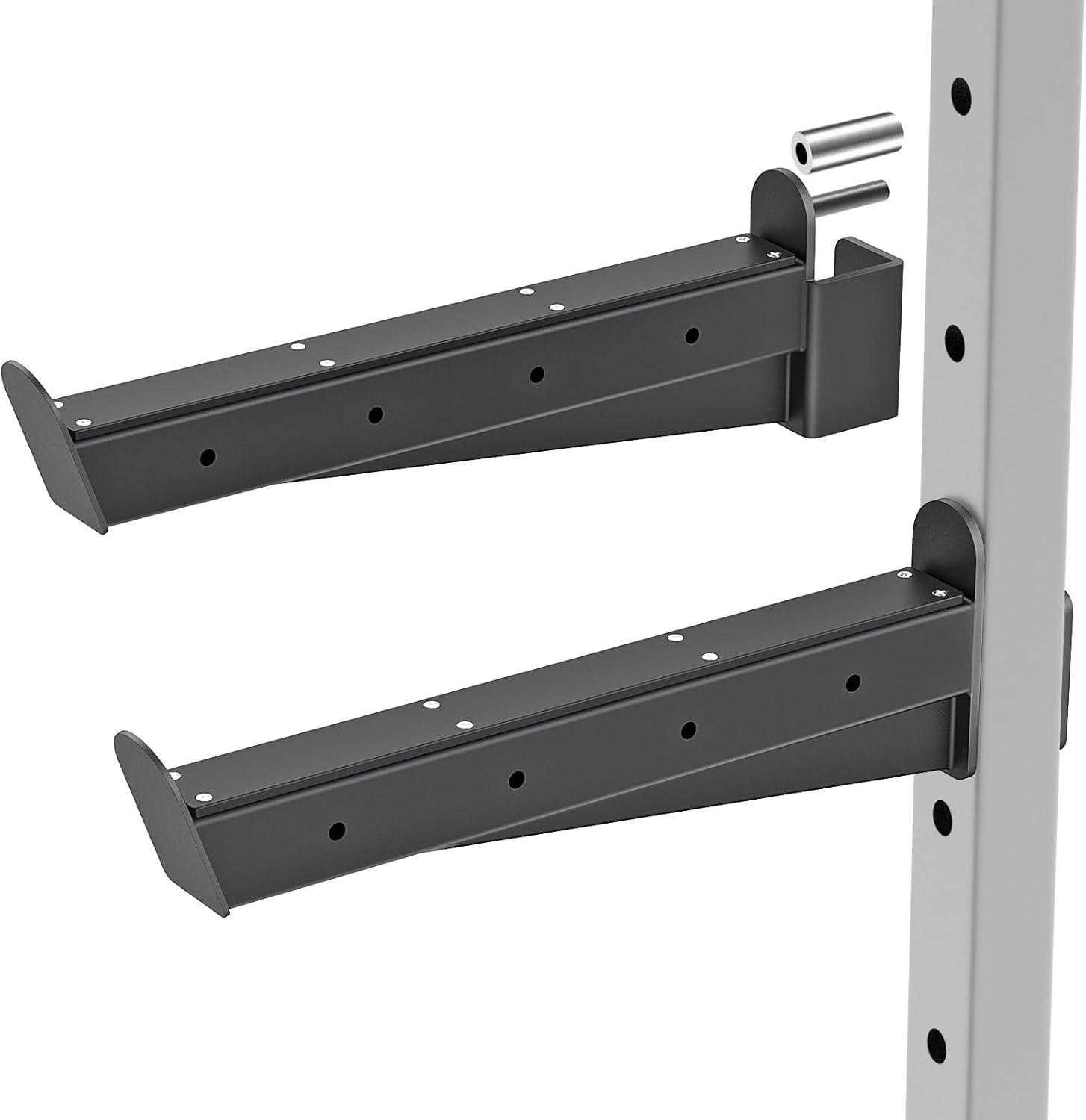 Kipika Spotter Arms (2x2)
|
Budget | Budget-friendly 2"x2" rack compatibility | Budget home gyms with 2"x2" uprights | Check Price | ||
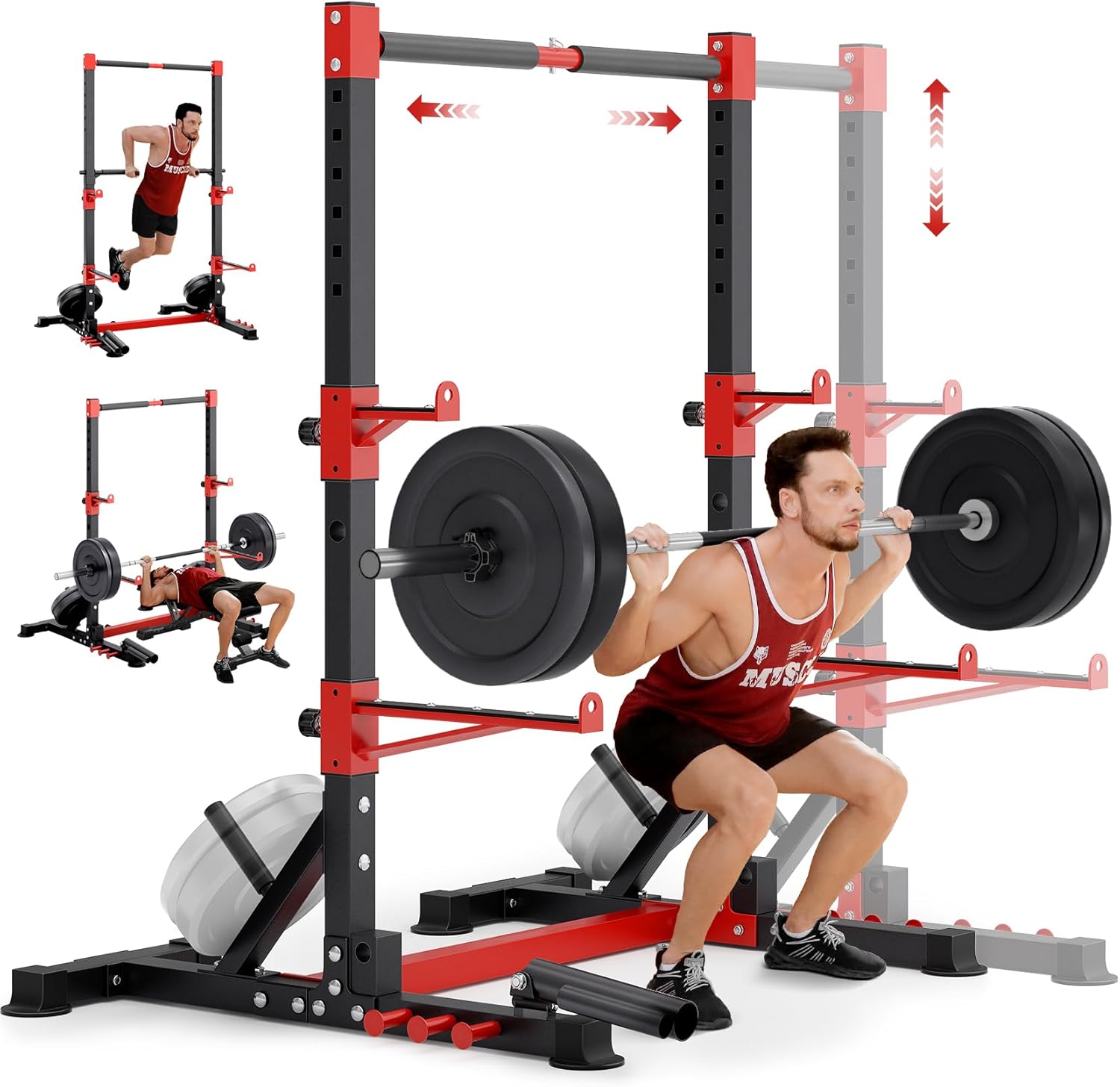 YOLEO Squat Rack
|
Premium | Integrated extended safety arms + 1000 lb capacity | Serious solo lifters needing full rack stability | Check Price |
1. Kipika Safety Spotter Arms for Power Racks with 5/8" or 1" Holes - Heavy Duty Barbell Safety Catches with Rubber Pad - Adjustable and Easy to Install - Set of 2
These heavy-duty safety arms give a solid, low-profile catching surface that reduces the risk of being pinned during bench presses or squats. They install quickly into 3"x3" uprights and the reinforced rubber pad cushions dropped bars while preventing roll-off—helpful for solo training where energy dissipation and bar protection matter.
Key Specs
- Compatibility: designed for most 3" x 3" power racks with 5/8" or 1" holes
- Load capacity: each arm rated to hold up to 500 lbs
- Material/finish: heavy-duty steel with powder coat finish
- Padding: 17.5" reinforced rubber pad with welded end caps
Pros
- Sturdy steel construction that customers say feels reliable for heavy lifts
- Rubber pad reduces noise and protects the barbell on impact
- Adjustable and quick to lock in place for different exercises
Cons
- Designed specifically for 3"x3" upright racks — won’t fit smaller frames
- Mid-range finish may show scuffs over time; some buyers expect heavier plating
Best For: Solo lifters with 3"x3" racks
Check Latest Price on Amazon2. Kipika Safety Spotter Arms for Power Racks with 5/8" or 1" Holes - Heavy Duty Barbell Safety Catches with Rubber Pad - Adjustable and Easy to Install - Set of 2
A wallet-friendly set of spotter arms for smaller 2"x2" power racks that delivers core safety without frills. They provide a dependable fail-safe surface for solo presses and squats and include the same rubber-protected cradle to reduce bar damage and noise, making them a pragmatic way to add safety to a budget setup.
Key Specs
- Compatibility: fits most 2" x 2" power racks with 5/8" or 1" holes
- Load capacity: rated up to 500 lbs
- Construction: heavy-duty steel with powder coat
- Padding: 17.5" reinforced rubber pad and welded end caps
Pros
- Excellent value for money for lifters on a budget
- Solid build and fit on common 2x2 uprights
- Easy height adjustment and locking pin design
Cons
- May not mate perfectly with non-standard rack hole spacing
- Budget finish can show wear and some buyers report minor fitment tweaks needed
Best For: Budget home gyms with 2"x2" uprights
Check Latest Price on Amazon3. YOLEO Squat Rack with Adjustable Pull-Up Bar & Extended Safety Arms, Multi-Functional Power Racks Squat Stand for Home Gym, Garage & Basement, 35"-67" Width, Fixed 83 Frame Height, Pull-Up Bar Height 71.5"-80.5", Fits 6FT & 7FT Barbells
The YOLEO power rack is a one-piece solution with integrated safety arms, wide base plates, and multiple J-hooks, designed to remove guesswork when lifting alone. Its reinforced triangular structure and 1000 lb support let you program heavy work with a high margin of safety, while adjustable width and pull-up options expand training variety.
Key Specs
- Frame: fixed 83" frame height with wide 54.7 x 43.7 base
- Safety: 16.5" extended safety arms and 4 J-hooks included
- Capacity: supports up to 1000 lbs
- Adjustability: width 35"–67"; pull-up bar height 71.5"–80.5"; fits 6FT & 7FT barbells
Pros
- Very stable reinforced frame gives confidence for heavy solo lifts
- Integrated safety arms and multiple J-hooks reduce setup steps
- Space-saving layout with plate storage keeps training area organized
Cons
- Premium size and weight make it harder to move and may complicate assembly
- Some users report mixed experiences with height adjustment ergonomics during setup
Best For: Serious solo lifters needing full rack stability
Check Latest Price on AmazonWhich One Should You Choose?
If budget is tight → choose the Kipika 2x2 set (B0CHLRCGTB) for dependable safety without breaking the bank. If you want the best balance of sturdiness and easy install → the Kipika 3x3 set (B0D2TJD7CL) is our top pick. If premium stability and built-in safety features matter most → the YOLEO rack (B0DKX4MX1M) provides the most complete, heavy-duty solution.
Best for Specific Scenarios
- Small garage gym, limited budget: Kipika 2x2 (B0CHLRCGTB) because it adds essential safety without replacing your rack.
- Training heavy on a larger rack: Kipika 3x3 (B0D2TJD7CL) because its thicker steel and long rubber pads handle heavier drops and protect the bar.
- All-in-one home setup and serious power work: YOLEO rack (B0DKX4MX1M) because integrated safeties, high capacity, and structural reinforcement let you push heavier lifts alone.
Frequently Asked Questions
Can I safely bench press alone without a spotter?
Yes, if you use properly rated safety arms or straps set to the correct height and use collars to secure plates. Set safeties slightly below your lowest expected bar path so they catch a failed rep without blocking the lift. Combine hardware with conservative programming (stop a rep or two shy of failure) for the safest approach.
How should I set safety arms to catch a failed squat or bench?
Set safety arms so they clear your full range of motion but will stop the bar before it pins you. For bench press, set them just below chest level when in your normal press position; for squats, set them at a depth where you can sit onto them safely (usually just below the bottom of your working squat). Test with light warm-up sets to verify bar path and clearance.
Do collars matter if I’m training alone?
Yes — collars prevent plate drift that can unbalance the bar and cause slips or awkward catches. Use sturdy clamp or friction collars rated for your bar; they’re an inexpensive way to reduce one more failure mode when lifting without help.
How We Selected These Products
Our recommendations are based on data-driven analysis: we evaluated 13975+ products across 2484+ brands using a composite scoring system that weighs rating (40%), review volume (30%), price value (20%), and demand signals (10%). Every product is ranked by data, not opinions.
Last updated: June 15, 2026
As an Amazon Associate we earn from qualifying purchases at no extra cost to you. Full disclosure.
FitReliant Score is our editorial ranking based on a composite analysis of product quality, value, and verified customer sentiment. Click through to Amazon for current pricing, availability, and live customer reviews.