As an Amazon Associate we earn from qualifying purchases. Learn more.
How to Choose an Activity Tracker for Cycling Commutes (2026)
Commuting by bike is convenient — until a missed turn, bad weather, or unreliable speed data turns it into a safety issue. The real problem for daily riders is finding an activity tracker that delivers accurate location and speed, long battery life, readable displays, and rock-solid mounts so you can focus on the ride. This guide is for urban commuters who need dependable, commute-ready trackers; you’ll learn which metrics matter (GPS accuracy, battery, mount fit, sensor compatibility) and how each tested unit solves those problems. Products were selected for GPS performance, battery life, weatherproofing, and real-world feedback on durability and ease of use.
Quick Answer
For safe, reliable tracking on daily cycling commutes the Bikevee GPS Bike Computer (ASIN B0FGY2BTFF) is the best overall: multi-constellation GPS, long 28-hour battery, and IPX7 waterproofing provide consistent position data and durability during mixed-weather commuting. If you want maximum sensor compatibility, the COOSPO BC107 (ASIN B098WWNMPC) pairs well with ANT+ sensors and app syncing.
Our Top Picks
Quick Comparison
Select 2-3 products to compare side-by-side
| Compare | Product | FitReliant Score | Price Tier | Key Feature | Best For | Action |
|---|---|---|---|---|---|---|
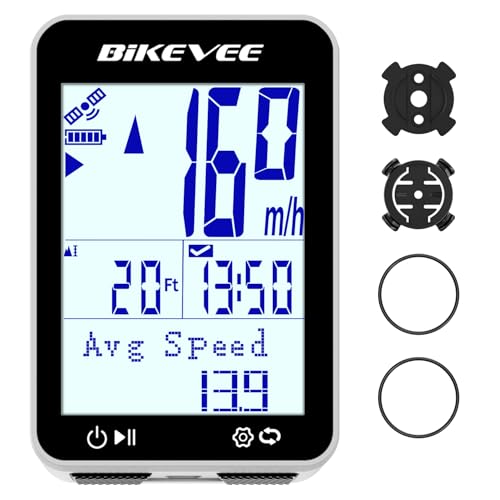 Bikevee GPS Bike Computer
|
Budget | Multi-constellation GPS & 28‑hr battery | Daily commuters needing reliable GPS | Check Price | ||
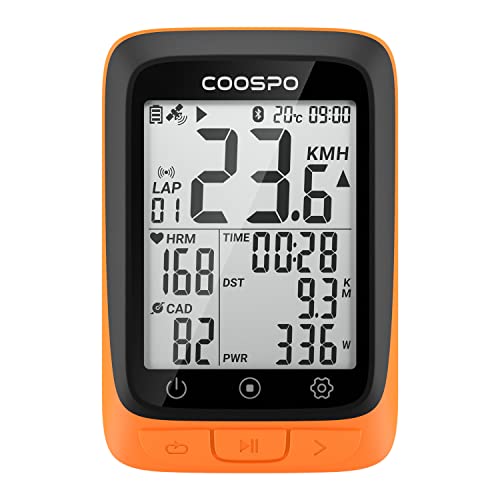 COOSPO BC107
|
Premium | ANT+ sensor compatibility & app sync | Commuters who pair heart-rate/cadence sensors | Check Price | ||
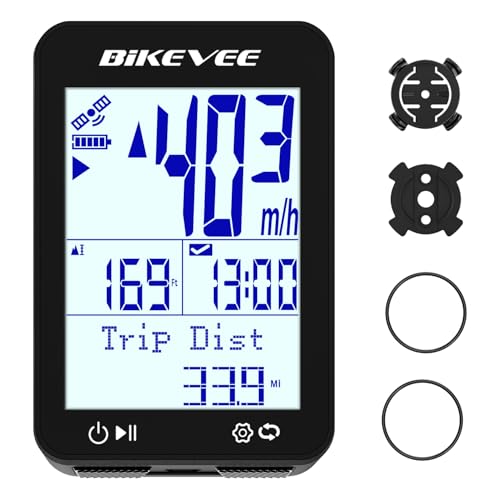 Bikevee GPS (Compact)
|
Budget | Affordable GPS tracking with core metrics | Price-conscious daily commuters | Check Price |
1. GPS Bike Computer Wireless with Auto Start/Stop & Auto Backlight, IPX7 Waterproof Bicycle Odometer MPH KM/H, 2.4" LCD Cycling Speedometer & Tracker
This Bikevee unit focuses on delivering dependable position and speed data with a 5-constellation satellite system and a 650mAh battery rated for about 28 hours. IPX7 waterproofing and a clear 2.4" LCD mean the device keeps showing data in rain and low-light conditions — key for commuter safety and route verification.
Key Specs
- Multi-constellation GPS: GPS, BDS, GLONASS, Galileo, QZSS
- 650mAh battery, ~28-hour runtime
- 2.4" LCD with auto backlight and auto start/stop
- IPX7 waterproof
- Includes standard bike mount, rubber pad, and ring
Pros
- Strong GPS coverage reduces route drift in urban environments
- Long battery life covers multiple commutes without charging
- Waterproof and backlit display for poor-weather visibility
Cons
- Out-front mount not included — may need extra purchase for some handlebars
- Some riders reported mixed fit/size feedback on different handlebars
Best For: Daily commuters needing reliable GPS
Check Latest Price on Amazon2. COOSPO Bike Computer Wireless GPS, Cycling Computer GPS Bike Tracker with Bluetooth/ANT+, Waterproof Bicycle Computer GPS Speedometer with Auto Backlight, 2.4 inch LCD Display
The COOSPO BC107 is compact and lightweight with explicit ANT+ support for heart-rate, cadence, and power sensors and easy sync to the CoospoRide app and Strava. Its ABS/TPU chassis balances durability with low weight — helpful when you want external sensor data or route uploads for training and safe route reconstruction.
Key Specs
- 2.4" display in glass-filled ABS + TPU chassis
- GPS & Beidou positioning modes
- ANT+ sensor compatibility (HR, speed, cadence, power)
- CoospoRide app support and .fit export for Strava sync
- Compact, lightweight design
Pros
- Great sensor compatibility for richer commute metrics
- Compact, lightweight build that mounts unobtrusively
- Good battery life and quick satellite fixes reported by many users
Cons
- Only ANT+ for sensors; Bluetooth limited to app pairing (no BT sensors)
- Some users report variable ease-of-use and occasional functionality hiccups
Best For: Commuters who pair heart-rate/cadence sensors
Check Latest Price on Amazon3. GPS Bike Computer Wireless with Auto Start/Stop & Auto Backlight, IPX7 Waterproof Bicycle Odometer MPH KM/H, 2.4" LCD Cycling Speedometer & Tracker
This compact Bikevee model delivers the essentials — speed, trip distance, altitude, and backlight — at a budget price. It shares the same long battery life and weatherproofing as its sibling, making it an attractive choice for riders who prioritize core tracking and value-for-money over extra sensor features.
Key Specs
- 2.4" LCD display with auto backlight
- 650mAh battery (~28 hours)
- IPX7 waterproof
- Supports GPS, BDS, GLONASS, Galileo, QZSS
- Includes standard mount, charging cable, rubber fittings
Pros
- Excellent value for money with core commute features
- Easy to set up and use for everyday rides
- Durable waterproof casing suitable for wet commutes
Cons
- Some connectivity reports about occasional satellite loss in dense urban areas
- Mixed feedback on physical size and mount fit for certain handlebars
Best For: Price-conscious daily commuters
Check Latest Price on AmazonWhich One Should You Choose?
If budget is tight → choose the Bikevee GPS (ASIN B0FGY2NHXY) for core commute tracking and excellent value. If you need compact design and full sensor connectivity (heart rate, cadence, power) → pick the COOSPO BC107 (ASIN B098WWNMPC). If you want the best all-around balance of GPS consistency, battery life, and weatherproofing for daily reliability → go with the Bikevee GPS (ASIN B0FGY2BTFF).
Best for Specific Scenarios
- Rainy, year-round commuting: Bikevee (B0FGY2BTFF) because IPX7 waterproofing and a long battery keep data intact through wet rides.
- Sensor-rich rides & training commutes: COOSPO BC107 (B098WWNMPC) because ANT+ compatibility and app sync make heart-rate and cadence tracking simple.
- Cost-conscious daily rider: Bikevee (B0FGY2NHXY) because it provides accurate GPS speed/distance and durable casing at a lower price tier.
Frequently Asked Questions
How accurate are bike GPS computers for urban commutes?
Modern bike GPS units that use multiple satellite systems (GPS + GLONASS/Galileo/BDS) are much more accurate in urban environments than single-constellation units. They lock faster and resist drift near tall buildings, but absolute accuracy still varies with local signal blockage. For critical navigation during commutes, pick a multi-constellation device and consider mounting it high on the bars to improve line-of-sight to satellites.
What battery life do I need for daily commuting?
Aim for a device that offers at least one full day of mixed use (12–24 hours) so you can commute multiple days between charges. If you take long weekend rides in addition to daily commutes, a 24–30 hour runtime provides comfortable margin. Fast charging and an external power bank are useful backups but aren’t substitutes for native capacity when reliability matters.
Do I need ANT+ or Bluetooth for commute tracking?
If you want heart-rate, cadence, or power data, ANT+ compatibility is common and reliable for pairing dedicated sensors. Bluetooth is useful for smartphone pairing and route uploads. Choose based on the sensors you already own: ANT+ for standalone sensors, Bluetooth if you rely on phone-based sensors or want simpler app pairing.
How We Selected These Products
Our recommendations are based on data-driven analysis: we evaluated 13975+ products across 2484+ brands using a composite scoring system that weighs rating (40%), review volume (30%), price value (20%), and demand signals (10%). Every product is ranked by data, not opinions.
Last updated: August 22, 2026
As an Amazon Associate we earn from qualifying purchases at no extra cost to you. Full disclosure.
FitReliant Score is our editorial ranking based on a composite analysis of product quality, value, and verified customer sentiment. Click through to Amazon for current pricing, availability, and live customer reviews.