As an Amazon Associate we earn from qualifying purchases. Learn more.
Complete Kids' Weekend Cycling Starter Kit (2026 Setup Guide)
Planning family weekend rides at the beach or park means thinking beyond the bike: safety, comfort and a handful of portable accessories make the outing relaxed and fun. This 2026 Complete Kids' Weekend Cycling Starter Kit focuses on helmets (the most essential safety gear), fit and comfort features, and which small add-ons make group rides smoother. I reviewed helmets that are adjustable, ventilated and built to meet US safety standards, and cross-checked common customer feedback on fit, materials and durability to recommend the best picks for toddlers through youth.
Quick Answer
For a safety-first kids' weekend cycling starter kit, the Radio Flyer Pink Helmet (B08GYGNWXV) is the best overall — it combines an adjustable interior, CPSC safety compliance, and a comfortable fit. If you need an adjustable, multi-size option for growing kids, the OUWOER adjustable helmet (e.g., B07CXGCK3V) is a strong budget-conscious alternative.
Our Top Picks
Quick Comparison
Select 2-3 products to compare side-by-side
| Compare | Product | FitReliant Score | Price Tier | Key Feature | Best For | Action |
|---|---|---|---|---|---|---|
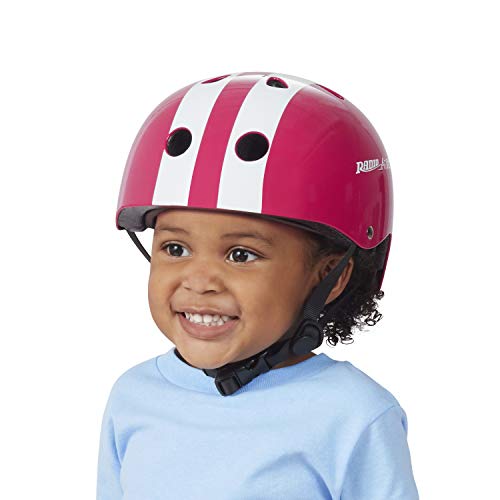 Radio Flyer Toddler Helmet
|
Mid-Range | Interior size adjuster for snug fit | Toddlers aged 2–5 who need a comfy fit | Check Price | ||
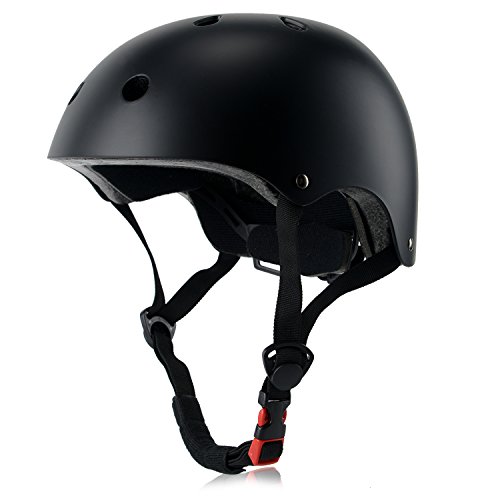 OUWOER Kids Helmet (Small)
|
Mid-Range | Crank dial for fast adjustments | Growing kids who need size flexibility | Check Price | ||
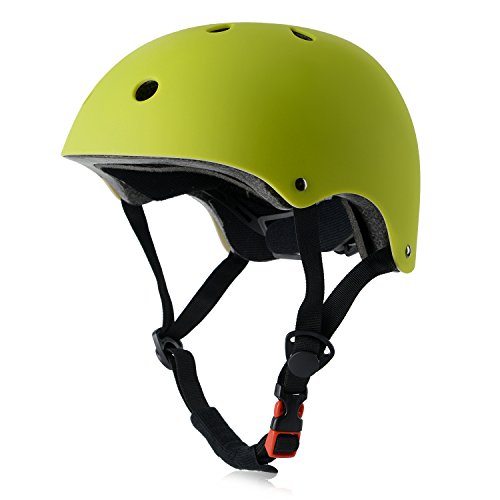 OUWOER Kids Helmet (Medium)
|
Mid-Range | Multiple pad sets for custom fit | Older kids needing medium/teen sizes | Check Price | ||
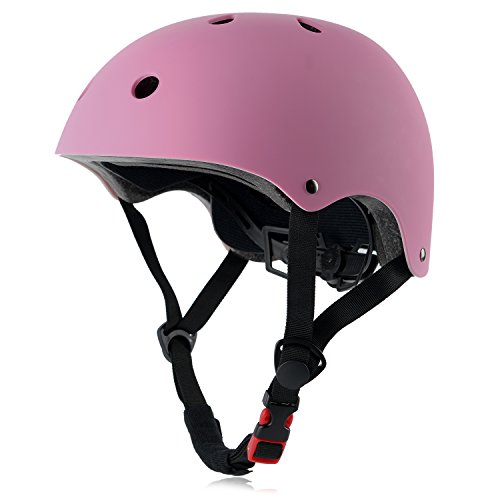 OUWOER Kids Helmet (Large)
|
Mid-Range | Wide size range up to adult youth | Teens and larger-headed youth | Check Price |
1. Radio Flyer Pink Helmet, Toddler or Kids Helmet for Ages 2-5 (AC100P)
The Radio Flyer toddler helmet pairs classic styling with a reliable interior adjuster that fits head circumferences from 48–54 cm. It meets U.S. CPSC safety standards and is often praised for comfort and sturdy construction, making it a strong safety-first pick for family beach and park rides.
Key Specs
- Fits head sizes 48–54 cm circumference
- Interior adjuster + chin strap with safety buckle
- Meets U.S. CPSC Safety Standard for Bicycle Helmets
- Dimensions: 21.25 L x 18.9 W (packaging/manufacturer spec)
Pros
- Adjustable interior gives a secure, comfortable fit
- Designed to meet U.S. safety standards
- Well-built and comfortable for toddlers
Cons
- May run large for smaller two-year-olds
- Limited venting compared with some multi-sport helmets
Best For: Toddlers aged 2–5 who need a comfy fit
Check Latest Price on Amazon2. Kids Bike Helmet, Adjustable and Multi-Sport, from Toddler to Youth, 3 Sizes (Small) - OUWOER
This OUWOER helmet offers a practical, adjustable solution with a crank dial, multiple pad thicknesses and good venting to keep kids cool. Customers praise the adjustability and comfort, though a few note mixed durability of internal plastic parts and occasional fit/slip issues on very young toddlers.
Key Specs
- Three sizes available (Small 48–54 cm)
- ABS shell with EPS foam for impact absorption
- 11 vents for airflow
- Crank dial adjustment and changeable pads
Pros
- Highly adjustable to grow with the child
- Good ventilation for warm beach/park rides
- Comfortable padding options included
Cons
- Some reports of interior plastic parts breaking
- May slip on very small heads without correct pad setup
Best For: Growing kids who need size flexibility
Check Latest Price on Amazon3. Kids Bike Helmet, Adjustable and Multi-Sport, from Toddler to Youth, 3 Sizes (Medium) - OUWOER
The OUWOER medium helmet maintains the brand’s strengths — ABS shell, EPS foam, and a crank dial — with pads of varying thickness to dial in fit for youth riders. It's a versatile multi-sport option suitable for kids who switch between bikes, scooters and skateboards.
Key Specs
- Medium fits 54–57 cm circumference
- ABS outer shell + EPS impact foam
- 11 top and side vents
- Length-adjustable chin straps and dial fit system
Pros
- Customizable padding helps secure fit
- Sturdy protective construction materials
- Good airflow for active outdoor use
Cons
- Durability opinions are mixed among buyers
- Some users report slip resistance issues without snug strap adjustment
Best For: Older kids needing medium/teen sizes
Check Latest Price on Amazon4. Kids Bike Helmet, Adjustable and Multi-Sport, from Toddler to Youth, 3 Sizes (Large) - OUWOER
The OUWOER large size extends the helmet range up to about 61 cm, keeping the same dial-fit system and venting. It’s a practical pick for older kids who still want a lightweight, adjustable helmet that can be used across activities.
Key Specs
- Large fits 57–61 cm circumference
- ABS shell, EPS foam impact layer
- 11 vents for cooling
- Crank adjustment dial and extra pad set
Pros
- Covers a larger head size range for longer use
- Adjustable system makes fit straightforward
- Lightweight and ventilated for longer rides
Cons
- Plastic components have mixed durability feedback
- Fit can feel loose if pads/straps not set correctly
Best For: Teens and larger-headed youth
Check Latest Price on AmazonWhich One Should You Choose?
If safety and a simple, reliable fit are the top priority, choose the Radio Flyer Pink Helmet (B08GYGNWXV) — its interior adjuster and child-friendly design make it ideal for toddlers. If budget and grow-with-me adjustability are most important, the OUWOER small (B07CXGCK3V) offers strong value with a crank dial and extra pads. If you need a size that will last into the tween years, the OUWOER medium or large (B07CXDNVLJ and B07CXHR3TC) are better for older kids who want a sportier feel and more ventilation.
Best for Specific Scenarios
- Short beach rides with toddlers: Radio Flyer (B08GYGNWXV) because the interior adjuster and toddler-focused sizing make it easy to get a secure fit fast.
- Growing kids who share helmets among siblings: OUWOER small/medium (B07CXGCK3V / B07CXDNVLJ) because the dial fit system and extra pads let the helmet be reconfigured for different head sizes.
- Warm, active park rides: OUWOER medium/large (B07CXDNVLJ / B07CXHR3TC) because the 11 vents and lightweight construction help keep kids cool and comfortable.
Frequently Asked Questions
How should a kids' helmet fit?
A helmet should sit level on the head, covering the forehead without tilting back, with the front edge about one to two finger-widths above the eyebrows. Straps should form a V under each ear and fasten snugly under the chin so the helmet doesn’t move more than an inch when you wiggle it.
Are dial-adjust helmets better than fixed-size helmets?
Dial-adjust systems offer finer fit control and are generally easier to adjust as a child grows, making them excellent for shared helmets or fast changes. Fixed-size helmets with multiple pad options can also work well but may require swapping pads for the best fit.
How often should I replace my child's helmet?
Replace a helmet after any significant impact, even if damage isn’t obvious, and consider replacing every 3–5 years due to wear, pad compression and evolving standards. Replace sooner if straps fray, the shell cracks, or internal parts (like dials) fail.
How We Selected These Products
Our recommendations are based on data-driven analysis: we evaluated 13975+ products across 2484+ brands using a composite scoring system that weighs rating (40%), review volume (30%), price value (20%), and demand signals (10%). Every product is ranked by data, not opinions.
Last updated: July 03, 2026
As an Amazon Associate we earn from qualifying purchases at no extra cost to you. Full disclosure.
FitReliant Score is our editorial ranking based on a composite analysis of product quality, value, and verified customer sentiment. Click through to Amazon for current pricing, availability, and live customer reviews.