As an Amazon Associate we earn from qualifying purchases. Learn more.
Barbell vs Trap Bar vs Hex Bar: Which to Buy First? (2026)
If you’re building a home gym in 2026 you’re likely asking whether a barbell, trap bar (hex bar) or a different setup belongs at the top of your shopping list. This guide helps movement-focused lifters prioritize based on common movement patterns, injury risk and equipment needs for small spaces. We compare three CAP Barbell weight plate options — budget cast iron, mid-range rubber-coated, and a premium cast set — to show what to buy to get the safest, most functional starting setup. Products were selected for build quality, ease of use, and real-user feedback about durability and value.
Quick Answer
For most home lifters buy a standard Olympic barbell first and pair it with CAP Barbell 2-Inch Olympic Weight Plates (ASIN B09NLDXYHP) — they offer the best mix of value, durable cast-iron construction and versatile grip holes. If you want a quieter, floor-friendly option, consider the rubber coated CAP Barbell plates (ASIN B0FDJMBWHN).
Our Top Picks
Quick Comparison
Select 2-3 products to compare side-by-side
| Compare | Product | FitReliant Score | Price Tier | Key Feature | Best For | Action |
|---|---|---|---|---|---|---|
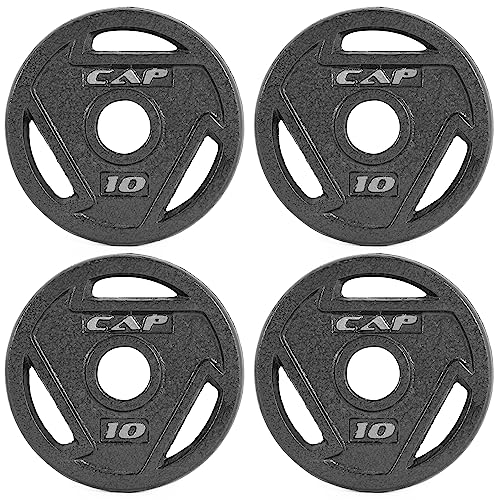 CAP Cast Iron Olympic Plate
|
Budget | Solid cast iron with grip holes | Home gym lifters wanting durable, low-cost plates | Check Price | ||
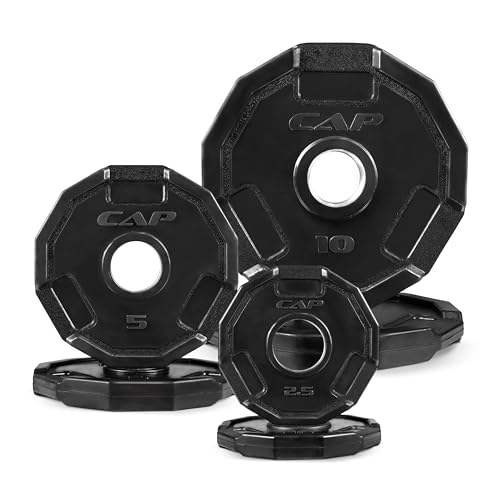 CAP Rubber-Coated Plate
|
Mid-Range | Rubber-coated, 12-sided non-slip design | Lifters who need floor protection and quieter drops | Check Price | ||
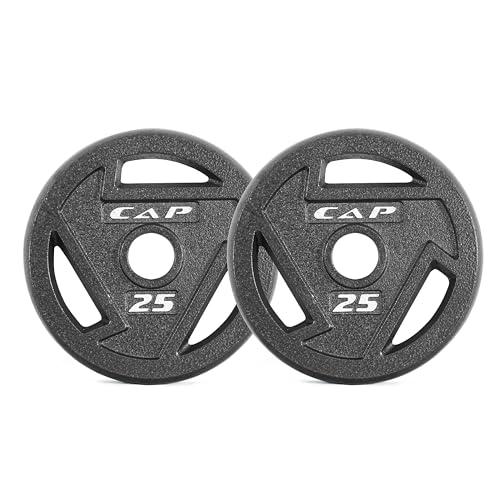 CAP Premium Cast Iron Plate
|
Premium | Heavier cast-iron option with machined hole | Lifters who want heavier plates and consistency | Check Price |
1. CAP Barbell 2-Inch Olympic Weight Plate | Multiple Options
A straightforward cast-iron Olympic plate with machined 2-inch center holes and built-in grip handles. Users consistently praise its accurate weight, solid feel and value for money — a sensible first purchase for a budget-conscious home lifter.
Key Specs
- Material: Solid cast iron
- Center hole: 2-inch Olympic
- Finish: Black baked enamel
- Design: Grip holes for handling
Pros
- Lower price than rubber-coated alternatives
- Clear grip holes make loading and floor exercises easier than smooth plates
- Durable baked enamel finish resists chipping compared with untreated cast iron
Cons
- Can be noisier and harder on floors than rubber-coated plates
- Some users note rough edges or finish inconsistencies on certain sizes
Best For: Home gym lifters wanting durable, low-cost plates
Check Latest Price on Amazon2. CAP Barbell 2-Inch Olympic Weight Plate | Multiple Options
Rubber-coated Olympic plates with a multi-sided shape for non-slip handling and floor protection. These are a good mid-range pick for apartment-safe lifting and deadlift-friendly workouts where noise and floor damage are concerns.
Key Specs
- Coating: Rubber-coated for floor protection
- Shape: 12-sided to prevent rolling
- Compatibility: 2-inch Olympic center hole
- Use: Marketed as bumper alternative for general training
Pros
- Better floor protection and quieter than bare cast iron
- 12-sided profile reduces rolling compared with round plates
- Non-slip surface is easier to handle in sweaty or high-rep sets
Cons
- Higher cost than basic cast-iron plates
- Long-term coating durability can be debated compared with solid steel
Best For: Lifters who need floor protection and quieter drops
Check Latest Price on Amazon3. CAP Barbell 2-Inch Olympic Weight Plate | Multiple Options
A heavier cast-iron option presented as a premium choice with a durable baked enamel finish and grip holes. Buyers report accurate weights and consistent feel between plates, though appearance feedback is mixed because of rough surface textures on some units.
Key Specs
- Includes: Common heavier sizes (example: 25 lb options)
- Material: Solid cast iron
- Finish: Baked enamel/hard paint
- Feature: Raised numbers and grip holes
Pros
- Heavier plates give better value per plate for progressing strength
- Consistent weight accuracy reported by users
- Grip holes make handling safer than smooth, thin plates
Cons
- Premium tier costs more than basic options
- Some customers note rough finish or texture irregularities
Best For: Lifters who want heavier plates and consistency
Check Latest Price on AmazonWhich One Should You Choose?
If your priority is maximum programming flexibility and long-term progression, buy a standard Olympic barbell first and pair it with the CAP Barbell 2-Inch Olympic Weight Plate (ASIN B09NLDXYHP) — the best overall budget-friendly option that gives accurate weight, grip handles and durable finish. If you live in an apartment or train where noise and floor damage matter, prioritize the rubber-coated CAP plates (ASIN B0FDJMBWHN) to protect surfaces and reduce sound. If you already have a bar and want heavier single-plate options with consistent load accuracy, choose the premium CAP cast iron plates (ASIN B0F16JCYDD). In short: barbell + B09NLDXYHP for most; if noise/floor protection matters more, pick B0FDJMBWHN; if you need larger single-plate increments, B0F16JCYDD.
Best for Specific Scenarios
- Starter home gym on a budget: CAP cast iron plate (B09NLDXYHP) because it's the most affordable way to load an Olympic bar and is praised for value and function.
- Apartment or garage with thin flooring: CAP rubber-coated plate (B0FDJMBWHN) because it reduces noise and protects floors better than bare iron.
- Serious strength progression: CAP premium cast plate (B0F16JCYDD) because heavier single plates and reported weight accuracy make loading heavier totals simpler.
Frequently Asked Questions
Do I need Olympic (2-inch) plates for a standard barbell?
Most modern power and Olympic bars use 2-inch sleeves and require Olympic plates. If you buy an Olympic bar, match it with 2-inch plates like these CAP options. Check your bar’s sleeve diameter before purchasing.
Are rubber-coated plates worth the extra cost?
If you care about noise reduction, floor protection and a slightly softer landing on drops, rubber-coated plates are worth the premium. For strict budget builds where you’ll use mats, cast-iron plates save money and still perform well.
Which bar reduces back strain—trap bar or barbell?
A trap (hex) bar places the load closer to your center and often reduces shear forces on the lower back during deadlift-style lifts, making it a safer option for lifters with prior back issues. A barbell allows more varied lifts, so choose the bar according to your movement priorities.
How We Selected These Products
Our recommendations are based on data-driven analysis: we evaluated 13975+ products across 2484+ brands using a composite scoring system that weighs rating (40%), review volume (30%), price value (20%), and demand signals (10%). Every product is ranked by data, not opinions.
Last updated: June 01, 2026
As an Amazon Associate we earn from qualifying purchases at no extra cost to you. Full disclosure.
FitReliant Score is our editorial ranking based on a composite analysis of product quality, value, and verified customer sentiment. Click through to Amazon for current pricing, availability, and live customer reviews.